AI Visibility Tools: The Complete Market Map for 2026
Summary
An AI visibility tool tracks whether ChatGPT, Perplexity, Gemini and Google AI Overviews mention, cite or recommend your brand, since a page ranking first on Google can still be invisible inside an AI-generated answer. We grouped seven of the most-cited 2026 platforms into three use cases: enterprise reputation monitoring (Profound, AthenaHQ, Ahrefs Brand Radar), AI tracking folded into an existing SEO suite (Semrush AI Toolkit, SE Ranking), and lightweight trackers for smaller teams (Peec AI, Otterly.ai). No single tool wins every budget or team size.
AI visibility tools split into three real categories, not one ranked list: enterprise reputation platforms (Profound, AthenaHQ, Ahrefs Brand Radar), AI tracking bolted onto a SEO suite you already pay for (Semrush AI Toolkit, SE Ranking), and lightweight trackers built for a single marketer (Peec AI, Otterly.ai). The right one depends on team size and budget more than on any feature list.
Why AI visibility became its own tool category
Traditional rank trackers report where a page sits on a results page. They say nothing about whether ChatGPT recommends a brand, or whether Perplexity cites a specific guide when a buyer asks a comparison question. That gap widened through 2026 as more searches ended inside the AI answer itself, without a click through to any website. A brand can still rank first on Google for its core keyword and be absent from the AI-generated summary a growing share of buyers read instead. AI visibility tools exist to close that measurement gap: they run a set of prompts against ChatGPT, Perplexity, Gemini and Google AI Overviews on a schedule, then report whether, how often, and in what tone a brand shows up.
How we compared these seven tools
We grouped platforms by primary use case rather than forcing them onto one ranked list, since a $29 a month tracker for a solo marketer and a $295 a month enterprise AEO platform are not really competing for the same budget. Five criteria apply across all seven: which AI engines each tool tracks, entry price, whether a free trial exists, the primary job the tool is built around, and whether it benchmarks named competitors. Where a vendor's own roundup names itself the winner, we treated that as marketing rather than as a neutral input; the full disclosure on that point is in the methodology note below the product cards.
Enterprise AI visibility platforms
Profound, AthenaHQ and Ahrefs Brand Radar share an assumption: the team using them already runs a dedicated AEO or GEO program, not a side project bolted onto an existing SEO subscription. Profound leans hardest into reputation, tracking whether AI systems describe a brand accurately and flagging misinformation before it compounds. AthenaHQ pairs tracking with an agentic copilot, Ask Athena, that answers plain-language questions about why a competitor outranks you in a given engine. Ahrefs Brand Radar wins on raw scale, drawing from over 400 million monthly search-backed prompts inside Ahrefs' own web index rather than a synthetic prompt set. All three carry enterprise-grade pricing, from roughly $99 a month at the low end of Profound's Starter tier to several hundred a month once a team needs broader engine coverage.
AI visibility folded into an SEO suite
Semrush AI Toolkit and SE Ranking's AI Search Toolkit take the opposite bet: most marketing teams already run a SEO platform, and asking them to open a second login for AI tracking is friction that loses adoption. Semrush folds AI mention tracking into the same dashboard as its keyword, backlink and site-audit tools, and its AI-crawler readiness check (whether GPTBot and Google-Extended can actually read a page) is a genuinely useful addition most standalone AI trackers skip. SE Ranking runs a narrower engine set but adds direct competitor benchmarking for up to five rivals and exposes the same data through API and MCP, so a team can query it from inside Claude rather than a separate dashboard.
Lightweight trackers for smaller teams
Peec AI and Otterly.ai both target a team of one to five people rather than an enterprise marketing org, but they solve slightly different problems. Peec AI's three-metric model, Visibility, Position and Sentiment, reads as intentionally simple, and daily tracking is included even on its $95 a month entry plan. Otterly.ai goes further on price, starting at $29 a month, and adds a Content Audit that explains why AI engines skip specific pages rather than only reporting that they do. Neither tool matches the narrative depth of Profound or the raw scale of Ahrefs Brand Radar, and that trade-off is the point: they exist for teams that need a real answer this quarter, not a year-long AEO program.
How to choose
Start from where your team already spends time, not from a feature checklist. A team standardized on Semrush or Ahrefs should try the AI add-on inside that suite before evaluating a standalone platform, since the switching cost of a new login and a new export format is real. A team where a single inaccurate AI answer could become a PR incident, healthcare, finance, anything regulated, should weight Profound's narrative and misinformation tooling above raw prompt volume. Everyone else, especially a team testing whether AI visibility tracking earns its line item at all, gets more signal per dollar from Otterly.ai or Peec AI in the first month than from an enterprise trial that requires a sales call before showing any data.
The honest limits of AI visibility tracking
Every tool in this comparison reports a snapshot, not a guarantee. AI answers change per session, per user location and per model version in ways no vendor fully controls, so a mention rate from last week is a signal, not a fixed score. None of the seven platforms here publish an independently audited accuracy figure for how closely their sampled prompts match real user queries, and two of the roundups we pulled research from during this comparison named their own product the category winner, worth knowing before treating any single "best AI visibility tool" claim, including ours, as more than one informed read on a genuinely fast-moving category.
Enterprise AI visibility platforms
Built for large marketing organizations running a dedicated AEO program across multiple brands or regions.
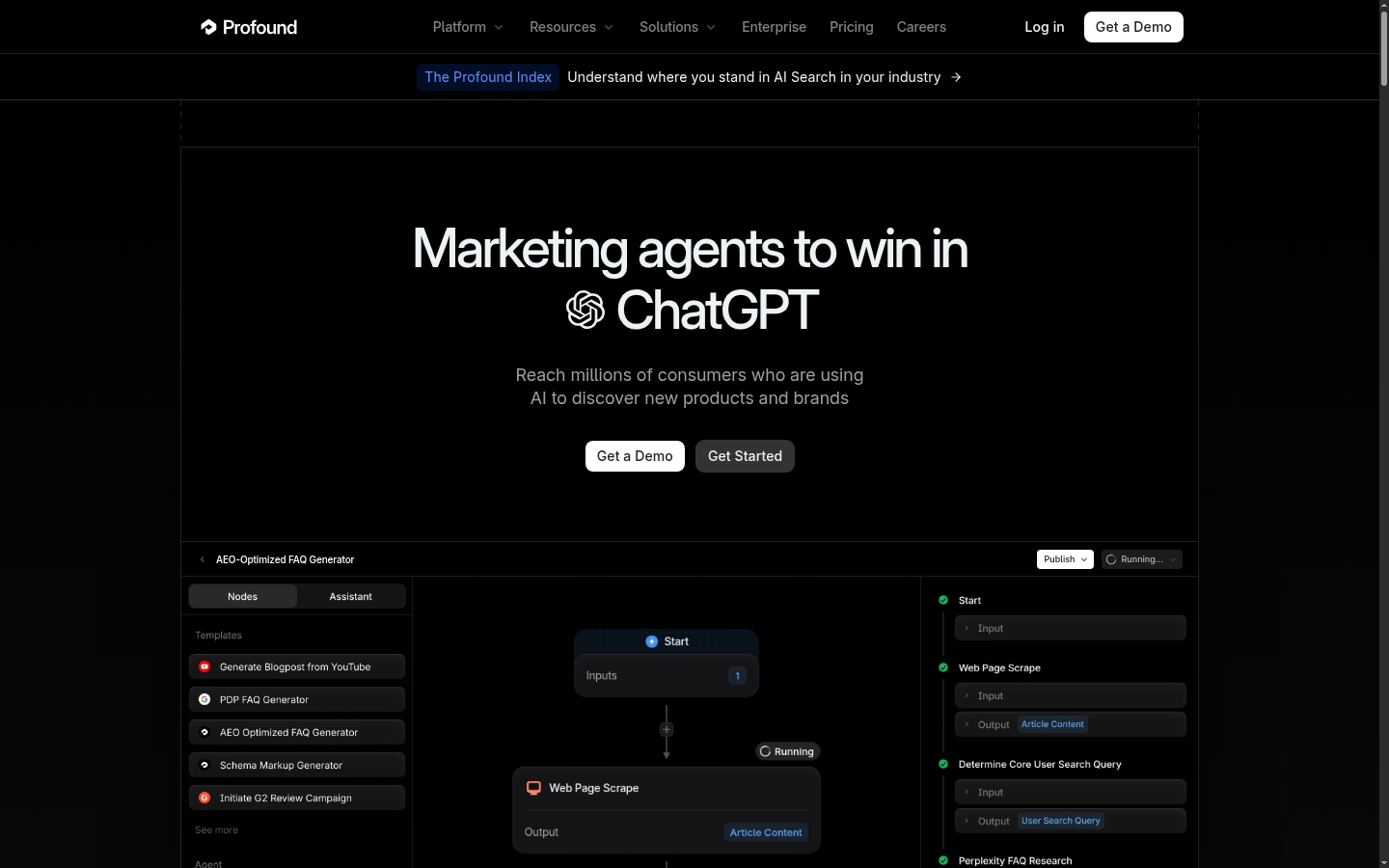
Profound
- Deep AI narrative and sentiment analysis, not just mention counts
- Automated Agents generate FAQ and prompt-aligned content to close visibility gaps
- AI misinformation detection flags inaccurate brand claims before they spread
- No self-serve free trial, a sales demo is required before you see real data
- Custom Enterprise pricing above the Growth tier can run well past $399 a month
- Traditional keyword and backlink SEO features are thin to non-existent
The strongest pick when reputation and narrative accuracy matter more than raw mention counts.
AthenaHQ
- Ask Athena answers plain-language questions instead of forcing dashboard digging
- SOC 2 Type 2 and GDPR compliance out of the box, unusual at this price tier
- Covers eight AI engines including Grok and Copilot, wider than most competitors
- Starter tier at $295 a month prices out most small and mid-sized teams
- Credit-based tracking can burn through quickly on broad prompt sets
- Interface leans toward enterprise dashboards, not a five-minute setup
Built for compliance-conscious enterprise teams that need an AI copilot layered over the data.
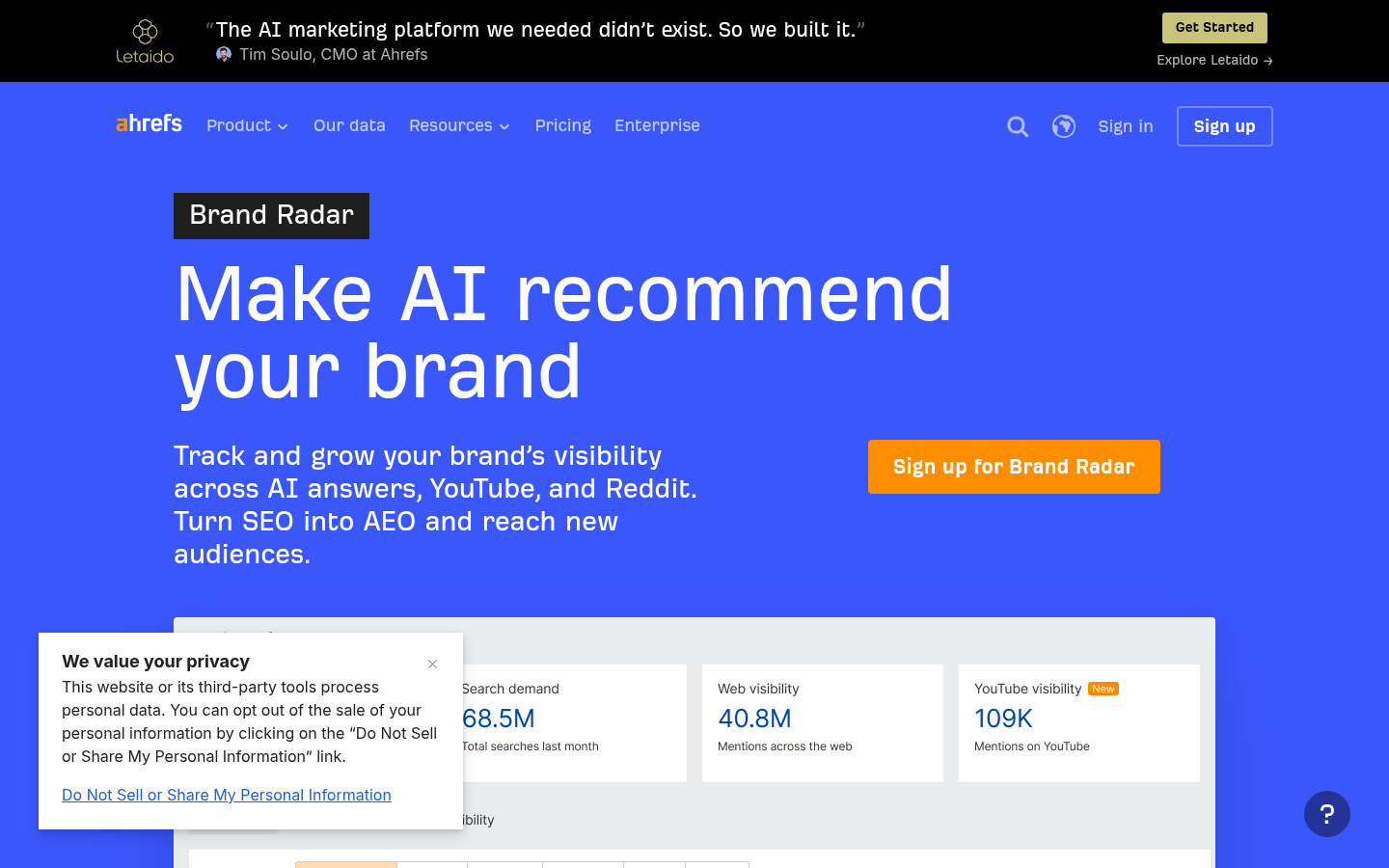
Ahrefs Brand Radar
- Largest search-backed prompt database in this comparison at 400 million-plus monthly prompts
- Unlimited projects let you benchmark any domain's AI visibility, not only your own
- Sources beyond AI answers too: YouTube, TikTok and Reddit visibility included
- Requires an existing Ahrefs seat first, it is not sold as a standalone product
- Select Platforms add-on starts around EUR 358 a month before any bundling
- No dedicated free trial, only a one-off AI Visibility Checker snapshot
Makes sense if you already live in Ahrefs and want the deepest prompt database available.
AI visibility folded into an SEO suite
For teams who would rather add AI tracking to a tool they already pay for than open a new subscription.
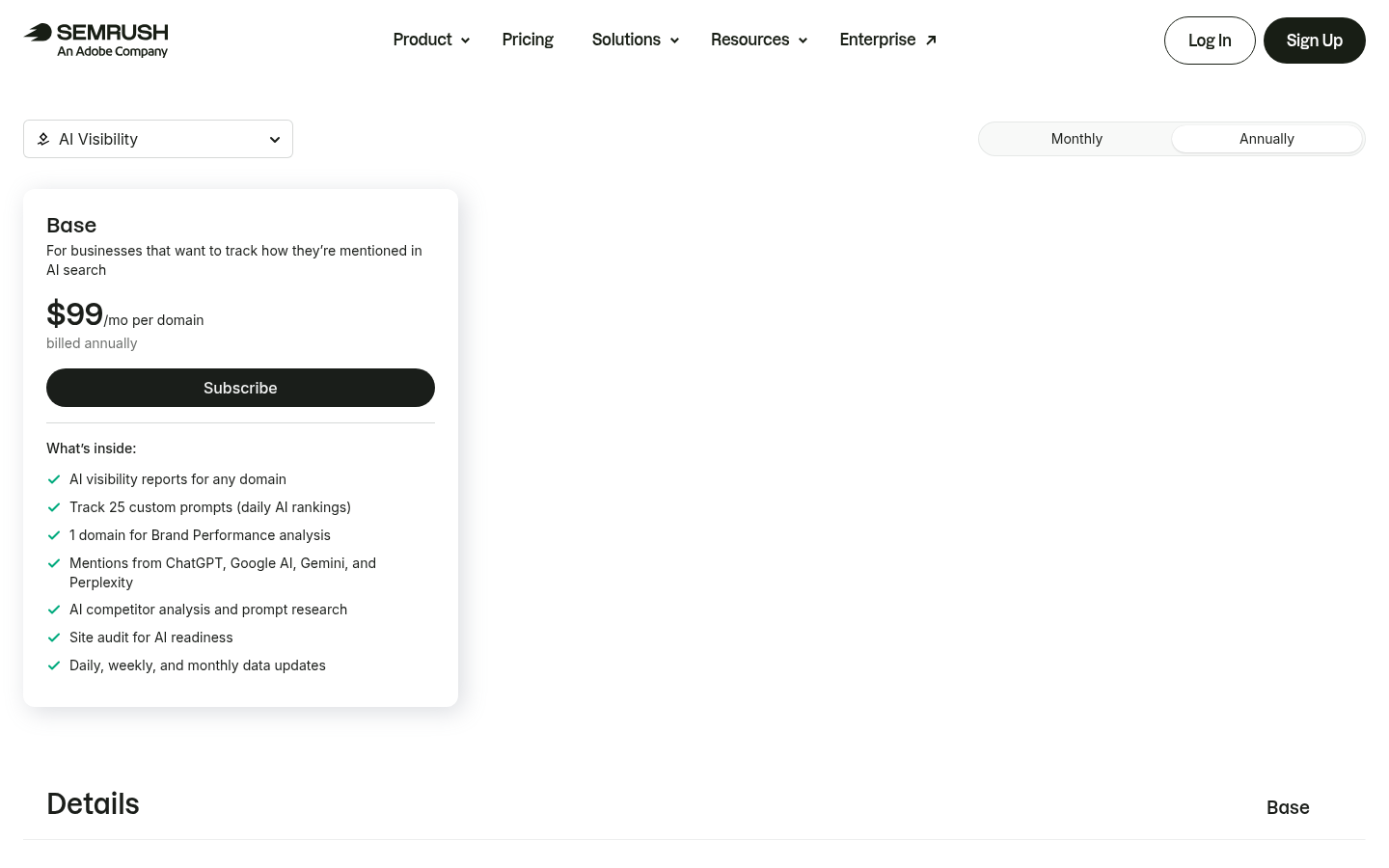
Semrush AI Toolkit
- AI visibility sits next to keyword, backlink and site-audit data in one dashboard
- Site audit specifically checks whether GPTBot and Google-Extended can crawl a page
- AI competitor share-of-voice analysis ships in the Base plan, not gated to Enterprise
- Base plan tracks only 25 custom prompts per domain, thin for a busy brand
- No dedicated free trial on the AI add-on itself, only on bundled Semrush One
- Full LLM coverage including Claude and Grok is Enterprise-only, custom priced
The pragmatic choice for teams who already pay for Semrush and want to avoid a second subscription.
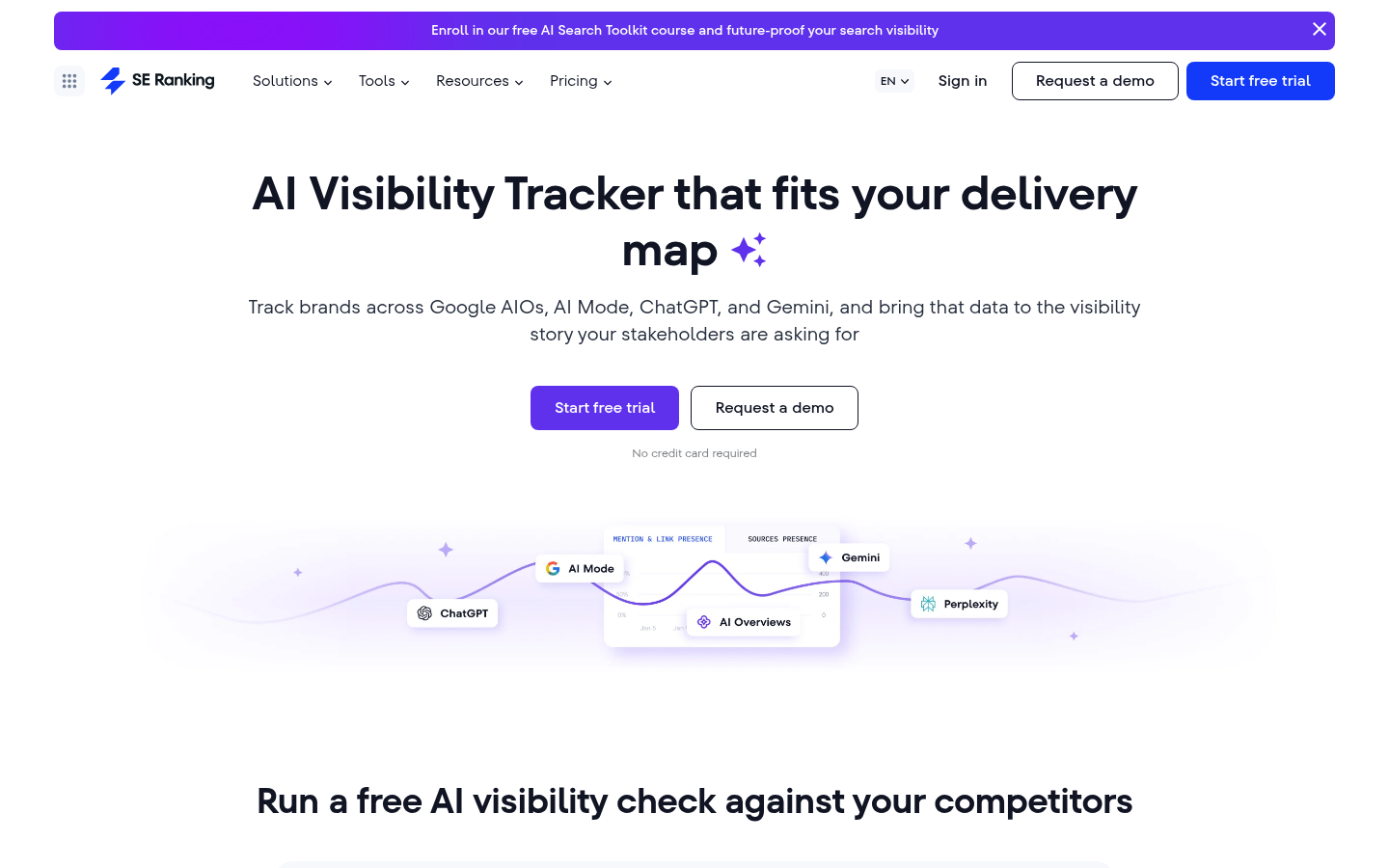
SE Ranking AI Visibility Tracker
- AI Competitor Research benchmarks up to five rivals side by side out of the box
- Historical data across 7 markets and 5 languages, useful for multi-region brands
- API and MCP access let you pull AI visibility data into Claude or other assistants
- Engine coverage stops at five platforms, narrower than Ahrefs or AthenaHQ
- AI tracking is bundled into a broader SEO plan, not sold as a standalone product
- Free daily checker caps at five lookups, not enough for ongoing monitoring
A sound fit if you want AI visibility folded into an SEO tool you already pay for.
Lightweight trackers for smaller teams
Entry price under $100 a month, built for a single marketer or small team running a lean dashboard.
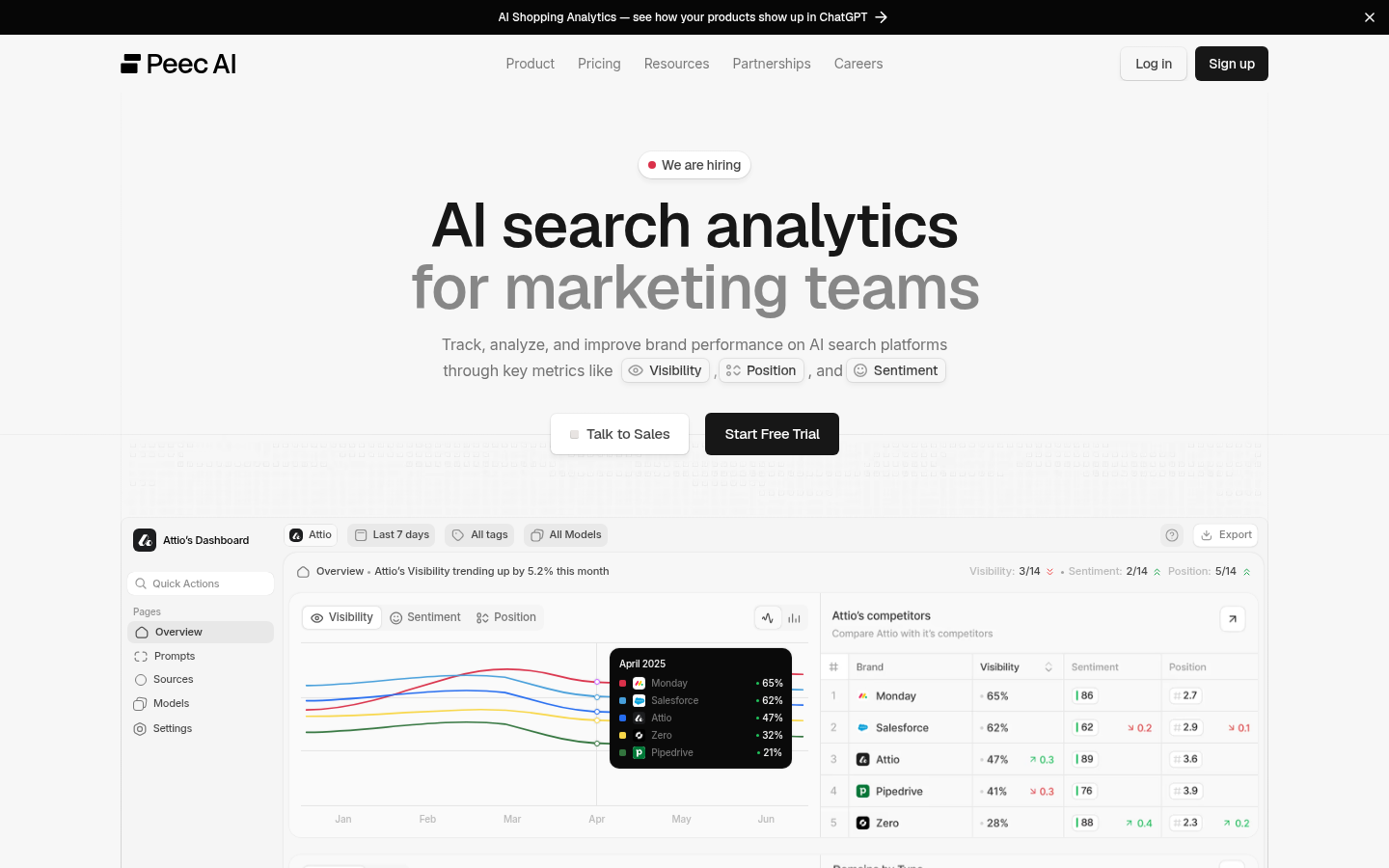
Peec AI
- Three clear metrics, Visibility, Position and Sentiment, instead of a cluttered dashboard
- Daily tracking is included from the entry Starter plan, not gated to higher tiers
- Looker Studio export on higher tiers simplifies client and stakeholder reporting
- No free tier at all, the cheapest plan still runs $95 a month
- Entry plan covers just 3 models and 50 prompts, tight for a multi-brand account
- Enterprise features like SSO and full 11-model coverage require custom pricing
The cleanest dashboard in this comparison for teams who value focus over raw engine count.
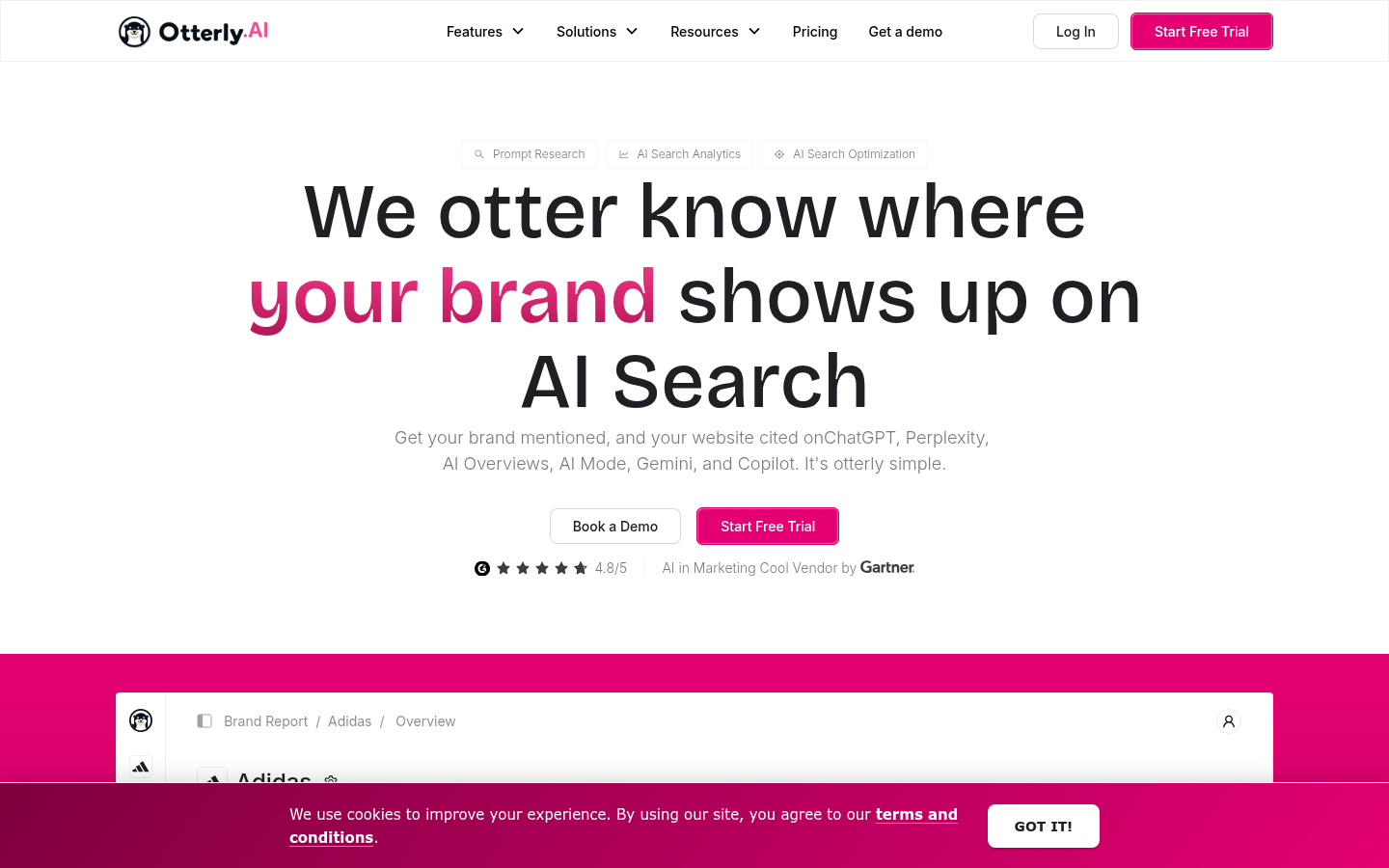
Otterly.ai
- Entry plan starts at $29 a month, the lowest in this comparison by a wide margin
- Content Audit explains why AI engines skip specific pages, not just that they do
- Public API and a 7-day free trial with no credit card lower the barrier to try it
- Lite plan caps at 15 tracked prompts, thin once you add competitors
- Standard tier jumps to roughly $189 a month, a steep step up from the entry price
- Feature depth trails the enterprise tools on narrative analysis and automation
The most defensible starting point for a team testing whether AI visibility tracking is worth budgeting for.
Verdict
There is no single best AI visibility tool in 2026, only a best fit per budget and team size. If you already pay for Ahrefs or Semrush, the AI add-on inside that suite is the path of least resistance and keeps reporting in one place. If AI reputation and narrative accuracy carry real weight, since a misquote from ChatGPT is a PR problem and not just a ranking drop, Profound or AthenaHQ justify their enterprise pricing. For a team of one to five people testing whether this category is worth budgeting for at all, Otterly.ai or Peec AI return usable data inside a week, at a fraction of the enterprise entry price.
How we tested
We started from the AI visibility tools most frequently cited across independent roundups (DemandSage, Frase, Rankability, GrowthOS, TheRankMasters) and G2's Answer Engine Optimization category as of July 2026, then cross-checked each vendor's own pricing and feature pages against those roundups rather than taking any single list at face value. Two of the sources we pulled from turned out to be reviewing their own product as the top pick, DemandSage carries a Semrush affiliate link and names Semrush One the winner, Frase's own comparison names Frase first, so we treated both claims as marketing and weighted independent-looking mentions more heavily. We did not open trial accounts or run head-to-head prompt tests inside each platform for this piece; pricing, engine coverage and feature claims are drawn from each vendor's public pages as of July 2026 and are worth re-confirming before you commit, since pricing in this category has moved every few months through 2026.