Best AI SEO Tools in 2026: 6 Platforms Compared by Use
Summary
The best AI SEO tools in 2026 split into content optimizers, suites and planners. Surfer SEO leads for teams that publish at volume, Semrush is the strongest all-in-one but starts at $139.95 a month, Clearscope serves editorial teams, NeuronWriter covers tight budgets from $19 a month, Frase fits brief-led drafting, and MarketMuse targets enterprise topical planning. We compared pricing, scoring, AI search tracking and customer ratings, without paid placements.
Six AI SEO platforms compared on price, content scoring, AI search tracking and planning depth. Public data, honest limits, and no affiliate placements.
At-a-glance
| Surfer SEO | Semrush | Clearscope | NeuronWriter | Frase | MarketMuse | |
|---|---|---|---|---|---|---|
| Entry price (public, 2026) | Discovery from $49/mo annual, Standard $99/mo, Pro $182/mo | SEO plan from $139.95/mo billed annually | Essentials $129/mo, Business $399/mo | Bronze $23/mo ($19 annual), free tier with 3 analyses | Starter $49/mo ($39 annual), Professional $129/mo | Free tier, paid plans gated behind a demo call |
| Real-time content scoring | Yes, 0-100 Content Score against live SERPs | Lighter (SEO Writing Assistant inside the suite) | Yes, A-F grade with term recommendations | Yes, NLP score with competitor terms | Yes, in-editor score tied to briefs | Yes, but secondary to planning |
| AI search visibility tracking | Separate AI visibility product (ChatGPT, Gemini, Perplexity) | Bundled into plans via the AI toolkit | Prompt tracking on Business tier (50 to 300 prompts) | Basic AI visibility features, less depth than rivals | GEO scoring and citation monitoring | Not a core feature |
| Topical planning and research | Keyword research, topical maps, content audits | Full keyword, gap and backlink research | Keyword discovery reports, no site-level planning | Per-article SERP analysis, internal link hints | SERP research and brief generation | Site-level inventory, gap maps, topic models |
| Typical buyer | Content teams shipping 20 to 100 articles a month | SEO teams that want one suite | Editorial teams and agencies with strict QA | Freelancers and small teams on a budget | Solo SEOs and small teams drafting from briefs | Enterprise teams with a large content library |
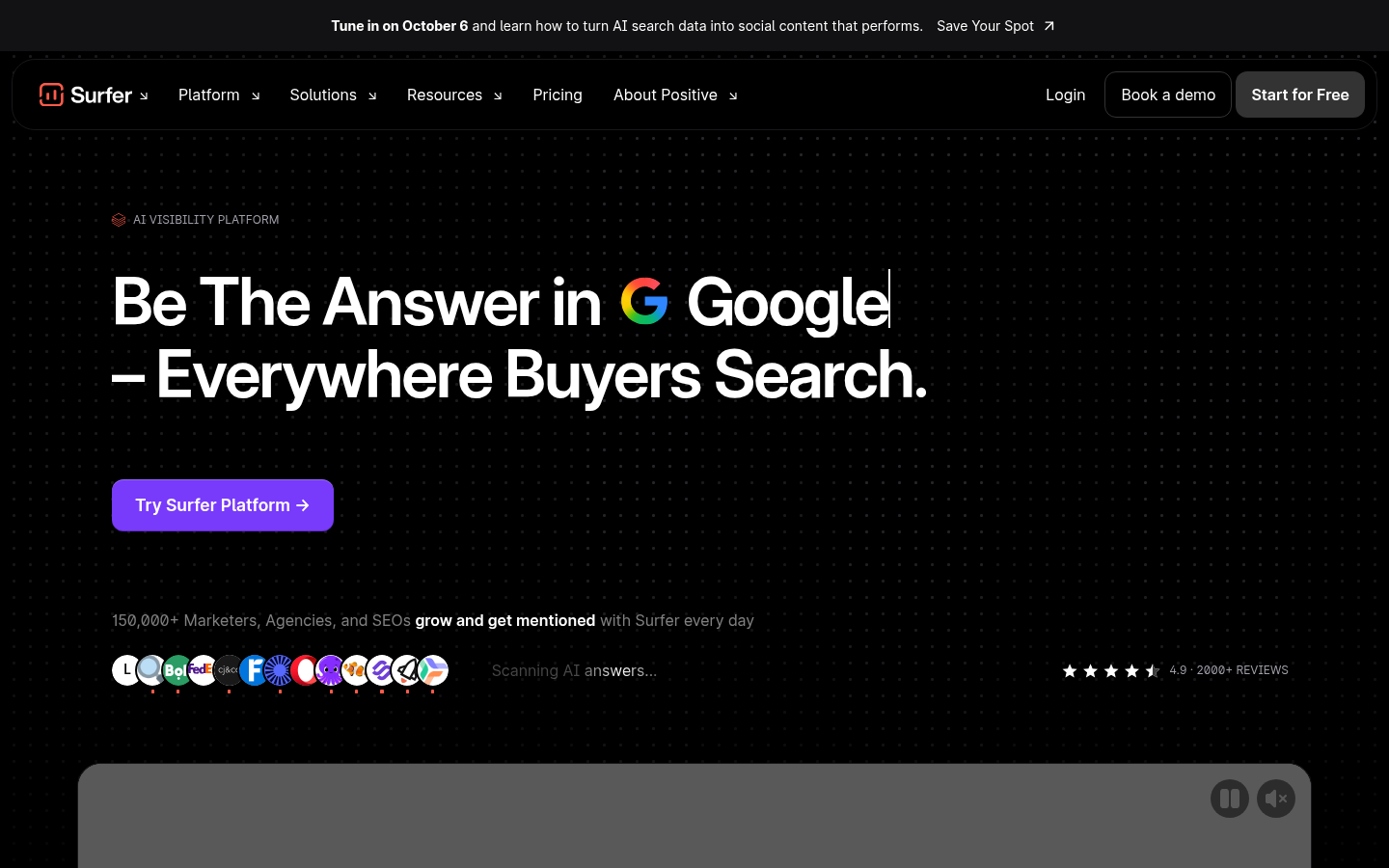
Surfer SEO
- Content Score is fast and well understood by writers
- Google Docs and WordPress integrations remove copy-paste
- Rated 4.8 on G2 and 4.9 on Capterra across hundreds of reviews
- AI visibility tracking is a separate paid product
- No backlink or full rank tracking suite, so it needs a companion tool
The strongest pure content optimizer, best when throughput matters.
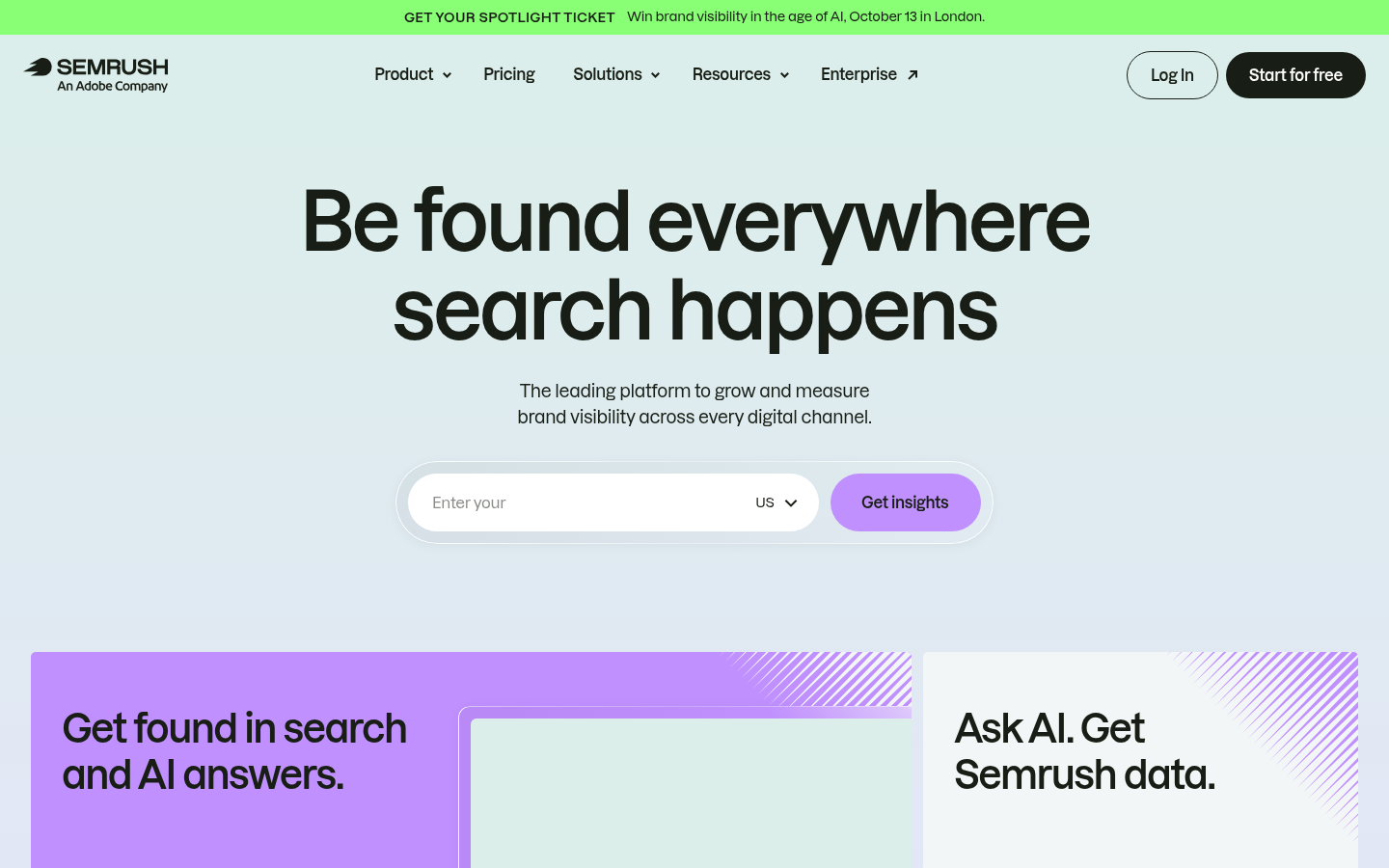
Semrush
- Broadest toolkit: keywords, audits, backlinks, rank tracking
- AI search tracking folded into every plan
- Reference data set most practitioners already know
- Highest entry price in this list at $139.95 a month
- Writing assistant is lighter than dedicated optimizers
Best all-in-one, but you pay for breadth you may not use.
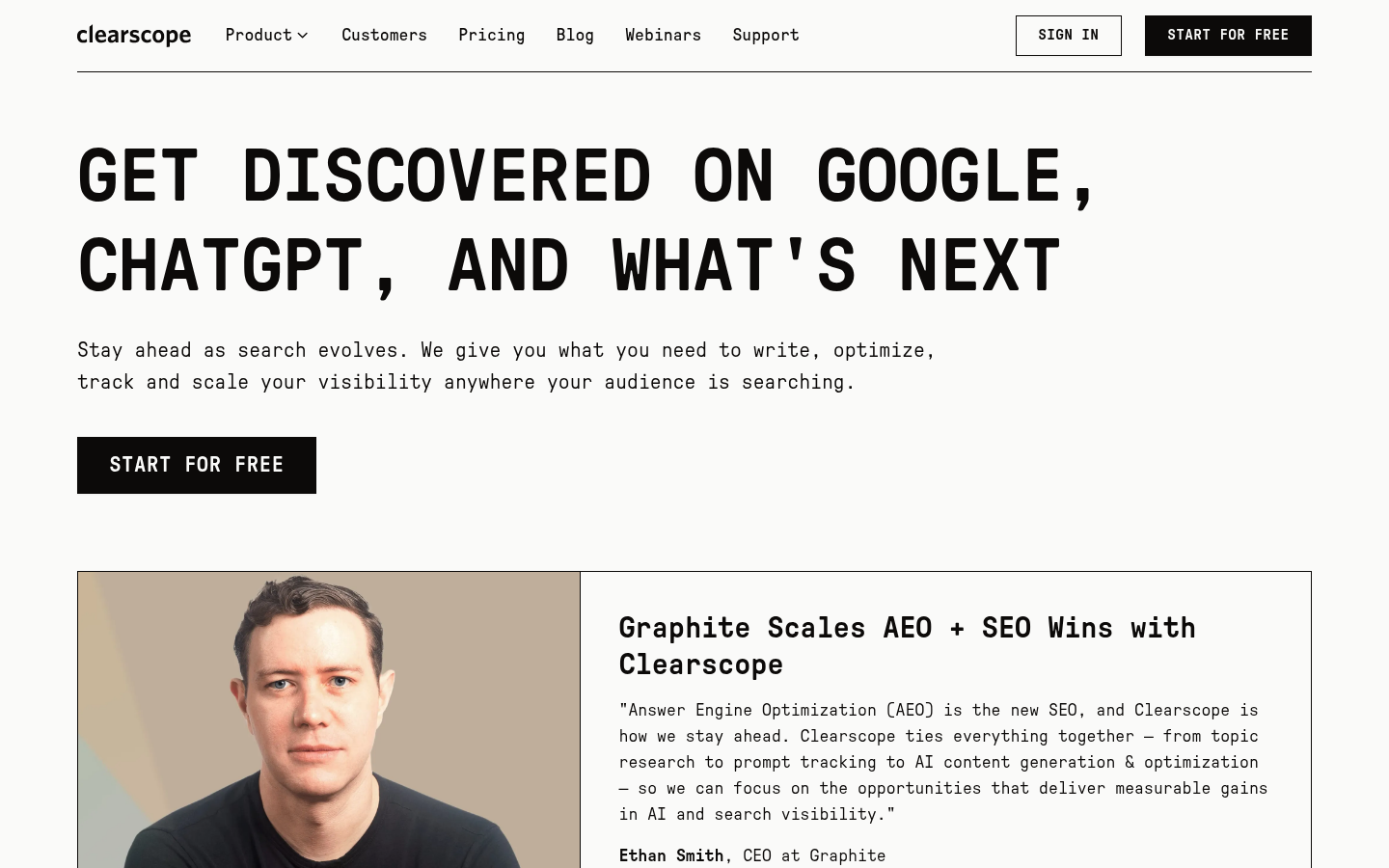
Clearscope
- Clean A-F grading writers adopt within a day
- Rated 4.9 on both G2 and Capterra
- Prompt tracking available for AI answer monitoring
- Essentials at $129 a month is steep for small teams
- No free tier and no built-in AI drafting at the core level
Premium editor experience at a premium price.
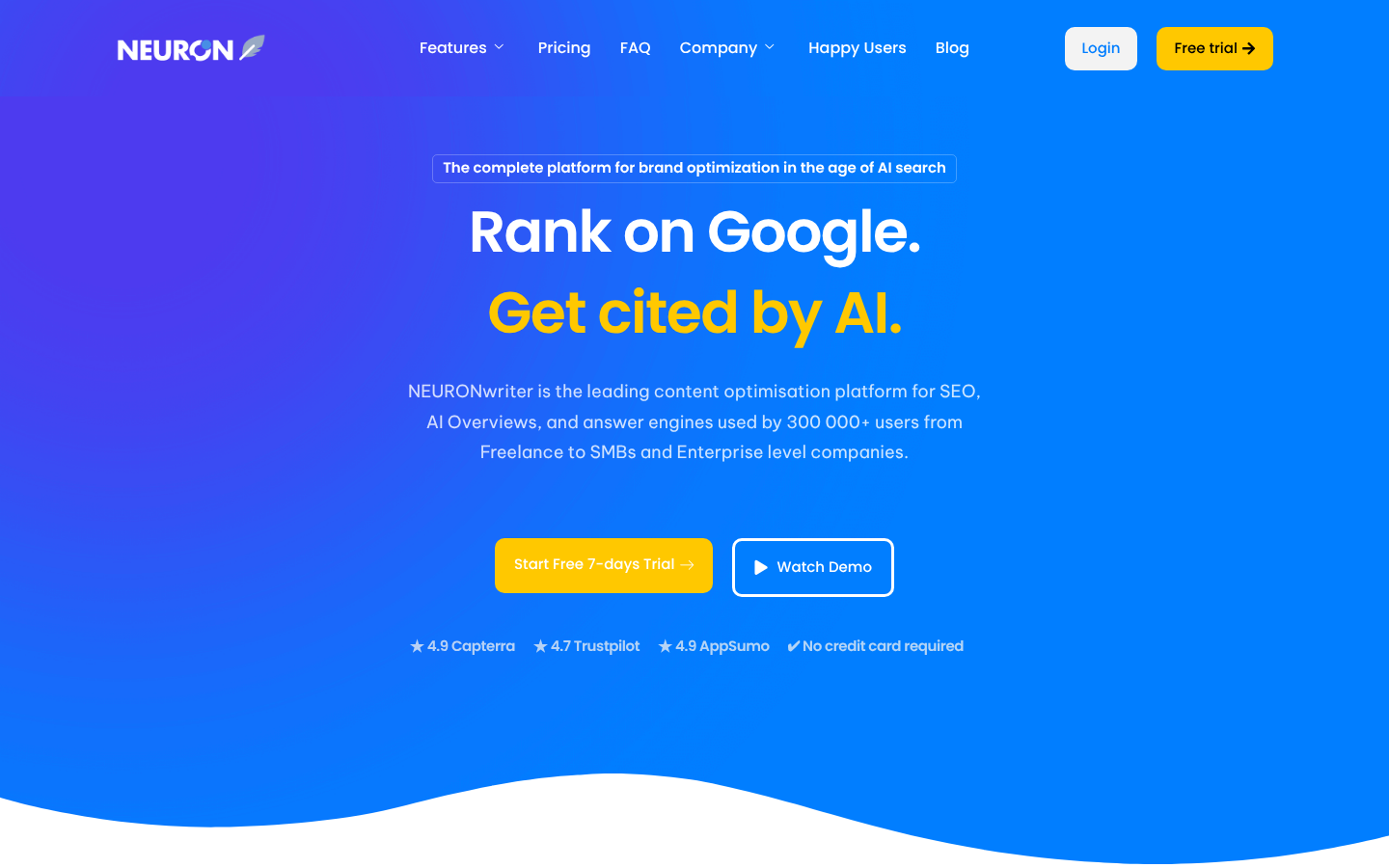
NeuronWriter
- Lowest entry price here, from $19 a month on annual billing
- Free tier lets you test the scoring before paying
- Includes AI drafting and internal link suggestions
- Interface is functional rather than polished
- Search Console and WordPress integrations only unlock from the Gold plan
The credible budget answer to Surfer.
Frase
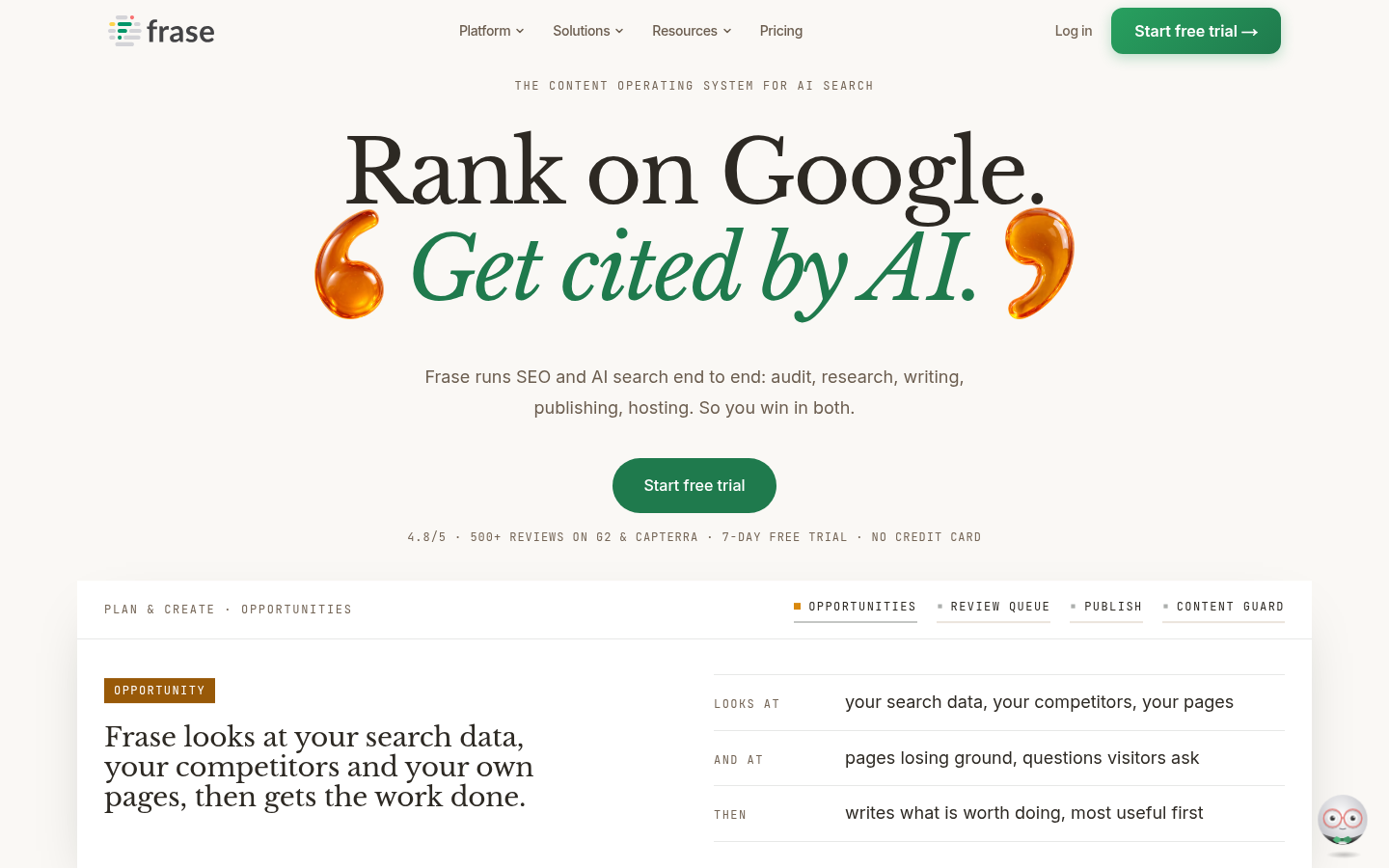
- Research to brief to draft in a single flow
- Rated 4.8 on G2 and Capterra across 500+ reviews
- GEO scoring for AI citations
- Entry price more than tripled in 2026, now $49 a month
- The agent interface exposes many tools and can feel heavy
Good for brief-led drafting, no longer the value pick.
MarketMuse
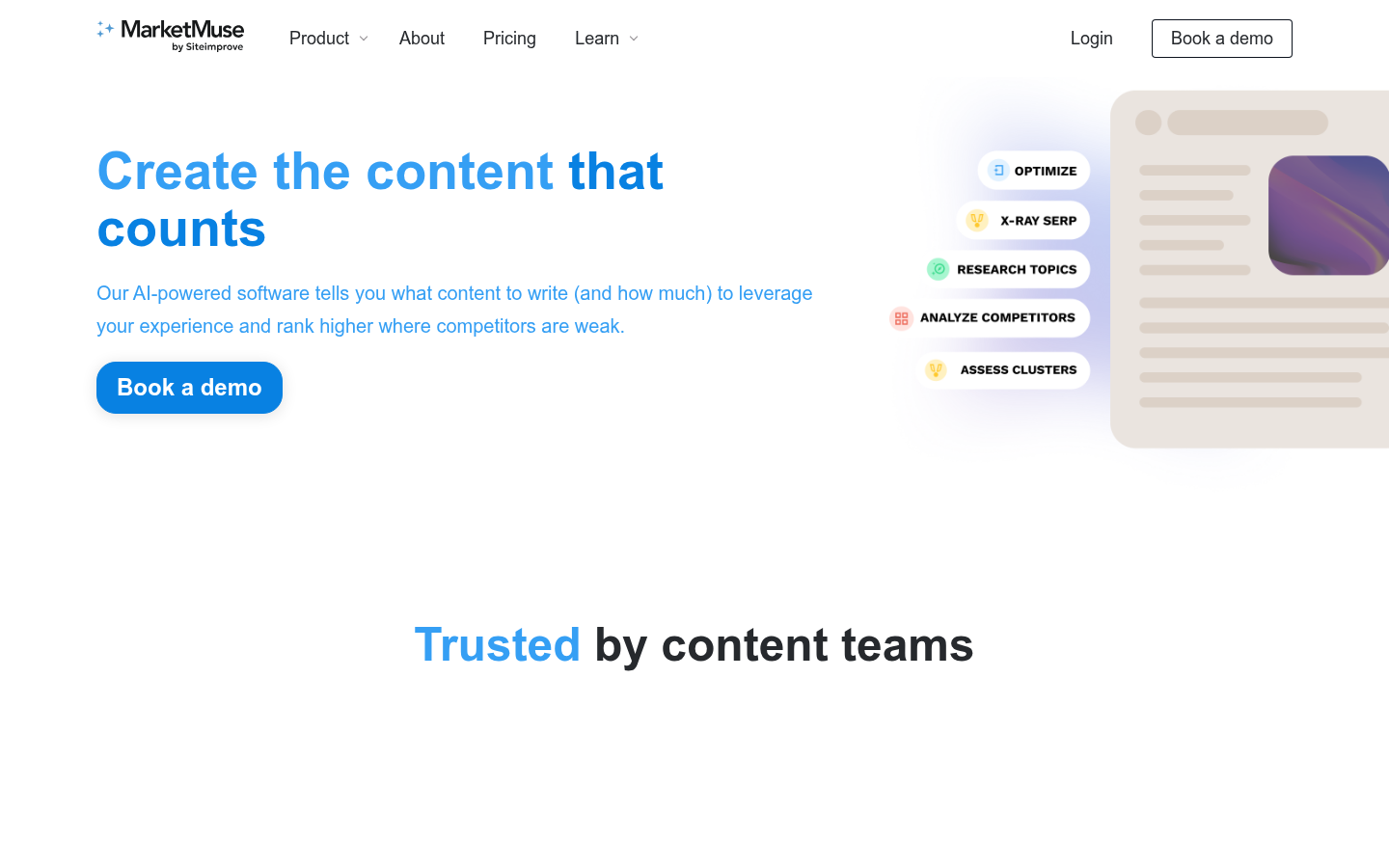
- Site-level content inventory and gap analysis
- Topic modeling suited to hub-and-spoke strategies
- Rated 4.6 on G2 and Capterra
- No public pricing, every paid tier needs a demo call
- More conceptual overhead than a brief-and-write tool
Strong for strategy at scale, overkill for single-article optimization.
Verdict
Surfer SEO is our pick for most teams that publish at volume: it pairs a fast, SERP-grounded Content Score with workable pricing from $49 a month. Semrush wins if you want research, tracking and AI visibility in a single subscription and can absorb $139.95 a month. Clearscope suits editorial teams that value grading clarity, NeuronWriter is the budget route, Frase fits brief-led drafting, and MarketMuse belongs to enterprise planning. None of these tools replaces editorial judgment, and none decides what is worth publishing.
How we tested
This is a desk comparison, not a lab test. We reviewed each vendor's public pricing page and homepage in September 2026, compared documented features, and cross-checked aggregate customer scores on G2, Capterra and Trustpilot. We did not run controlled ranking experiments, so scores below reflect fit and evidence, not measured traffic gains. Prices change quickly in this category: five of seven tools in a recent industry roundup repriced within three months, so verify on the vendor page before buying. Scores use a 0 to 5 scale weighted toward content optimization quality, AI search coverage, price transparency and aggregate customer ratings. No product in this page carries an affiliate link, and none paid for placement.
The best AI SEO tools in 2026 are Surfer SEO, Semrush, Clearscope, NeuronWriter, Frase and MarketMuse, and the right one depends on whether your bottleneck is optimizing drafts, measuring AI search visibility or planning topics. Surfer SEO is our overall pick for teams that publish at volume. Semrush is the better choice if you want one subscription for research and tracking. The rest earn their place in narrower cases, which the sections below spell out with prices, limits and customer ratings.
How we compared these tools
A comparison of this kind is only useful if the criteria are visible. We kept five: entry price, real-time content scoring, AI search visibility tracking, topical planning and research, and the buyer each tool fits. Each criterion maps to a decision a content team actually makes. Price decides who can afford a seat. Scoring decides whether writers adopt the tool. AI visibility tracking decides whether you can see citations in ChatGPT, Gemini and Perplexity. Planning decides whether the tool helps before the first draft exists.
The evidence is public: vendor pricing pages, homepages, and aggregate scores on G2, Capterra and Trustpilot. We did not run ranking experiments, and a content score is not a ranking model. That is a limit worth stating plainly. If a vendor publishes a case study claiming a traffic gain, treat it as a claim, not a measurement.
EsyBlog produces this page with its own editorial pipeline, so a disclosure belongs here. EsyBlog is a publishing engine, a different category from the tools below, and none of these vendors is a paid partner. We hold no affiliate links for any product in this list.
What changed in AI SEO tooling this year
Two shifts matter. First, almost every vendor now sells some form of AI visibility tracking: monitoring whether your brand appears in answers from ChatGPT, Gemini and Perplexity. The depth varies a lot. Semrush folds it into every plan, Clearscope reserves prompt tracking for its Business tier, and Surfer sells it as a separate product.
Second, pricing is unstable. Frase moved its cheapest plan from about $15 to $49 a month in 2026. MarketMuse stopped publishing prices after its acquisition by Siteimprove and now routes every paid tier through a demo. If you read a roundup older than a quarter, assume its numbers are wrong.
1. Surfer SEO: the content optimizer to beat
Surfer builds a brief from the live SERP, scores your draft from 0 to 100 as you write, and suggests terms to add or cut. That loop is quick enough that writers use it without being forced to. Public pricing runs from $49 a month for Discovery to $182 for Pro on annual billing, with Standard at $99. Customer scores are strong: 4.8 on G2 across 544 reviews and 4.9 on Capterra across 422.
Where it falls short is scope. Surfer is not a backlink or rank tracking suite, and its AI visibility tracker is a separate paid product. A team that needs both optimization and measurement will pay twice or pair Surfer with another tool. For a content team shipping 20 to 100 articles a month, though, it remains the reference point.
2. Semrush: the suite for teams that want one login
Semrush is the widest toolkit here: keyword research, site audits, backlink analysis, rank tracking and an AI toolkit that tracks visibility in AI search. Its SEO plan starts at $139.95 a month on annual billing, which makes it the most expensive entry point in this comparison. In return you get a data set most practitioners already trust and AI tracking included in the plan rather than sold on top.
The honest caveat is the writing layer. Semrush's SEO Writing Assistant is lighter than Surfer or Clearscope, so teams that live in an editor all day often keep a dedicated optimizer next to it. Buy Semrush for research and measurement breadth, not because it will out-score a specialist on a single draft.
3. Clearscope: grading clarity for editorial teams
Clearscope gives writers an A-F grade and a list of terms, wrapped in the cleanest interface of the group. Essentials costs $129 a month and Business $399, which adds AI answer prompt tracking from 50 to 300 prompts. It scores 4.9 on G2 across 91 reviews and 4.9 on Capterra across 60. Its customers include large publishers and software brands.
You pay for consistency. The tool fits agencies and in-house teams where every brief is reviewed, and where an editor wants a grade to point at in feedback. It does not fit a solo blogger watching every dollar, and there is no free tier.
4. NeuronWriter: the budget option that holds up
NeuronWriter delivers SERP-based scoring, competitor term lists, an AI writer and internal link suggestions from $23 a month, or $19 on annual billing. A free tier allows three analyses a month, enough to judge whether the scoring helps your process. G2 scores sit around 4.6 to 4.7 across 80 or more reviews, and its homepage cites 4.9 on Capterra.
The compromises are real. The interface is workmanlike, analysis caps are tight on the lowest plans, and Search Console and WordPress integrations only unlock from the Gold plan at $69. For a freelancer or a small team validating an AI-assisted workflow, the price to capability ratio is hard to beat.
5. Frase: briefs and drafts in one workspace
Frase runs research, outline, draft and score inside one workspace, and it adds GEO scoring and citation monitoring. Plans start at $49 a month on Starter ($39 annual), with Professional at $129 and Scale at $299. It holds 4.8 on both G2 and Capterra across more than 500 reviews.
The 2026 repricing changed its position. It used to be the value pick, and that title now belongs to NeuronWriter. It still undercuts Clearscope and suits a solo SEO who wants to go from a query to a first draft quickly. The newer agent interface exposes many tools, which some teams find heavy.
6. MarketMuse: planning before writing
MarketMuse works at a different altitude. It builds a content inventory, maps where your authority is thin and models which topics to build next. That is useful for a hub-and-spoke strategy across a large library, and less useful if you simply need to improve one article. It carries 4.6 on G2 across 216 reviews and 4.6 on Capterra across 28.
Pricing is the sticking point. A free tier exists, but paid plans require a demo call, which costs it on transparency. Historic public prices ran from roughly $149 to $999 a month, so budget accordingly and ask for current figures.
Which one should you pick?
Start from your bottleneck, not from the feature list. If drafts are the problem, choose Surfer SEO, or Clearscope if editorial control matters more than price. If measurement is the problem, choose Semrush. If budget is the problem, choose NeuronWriter. If you need briefs and first drafts fast, try Frase. If you need to decide what to write across hundreds of existing pages, evaluate MarketMuse.
The mistake we see most often is stacking two cheap optimizers and trusting both scores. A content score is a guide to coverage, not a promise of rank. Pick one, set the score target as a floor rather than a trophy, and keep a human editor responsible for claims and angle.
Common limits of every tool on this list
All six tools optimize against what already ranks. That makes them good at closing coverage gaps and weak at original angles, first-hand data or a clear point of view. They also lag on very fresh topics, because SERP-derived terms reflect last month's results. Use them for the structure of a page, then spend the saved time on the part no tool can supply: a measured claim, a source, a decision the reader can act on.